The dogs
Ask anyone who has hunted here what they remember and they will tell you about the dogs before they tell you about the birds. That is not an accident. At Backcountry the shooting is your part in the day — the dog work is the show.
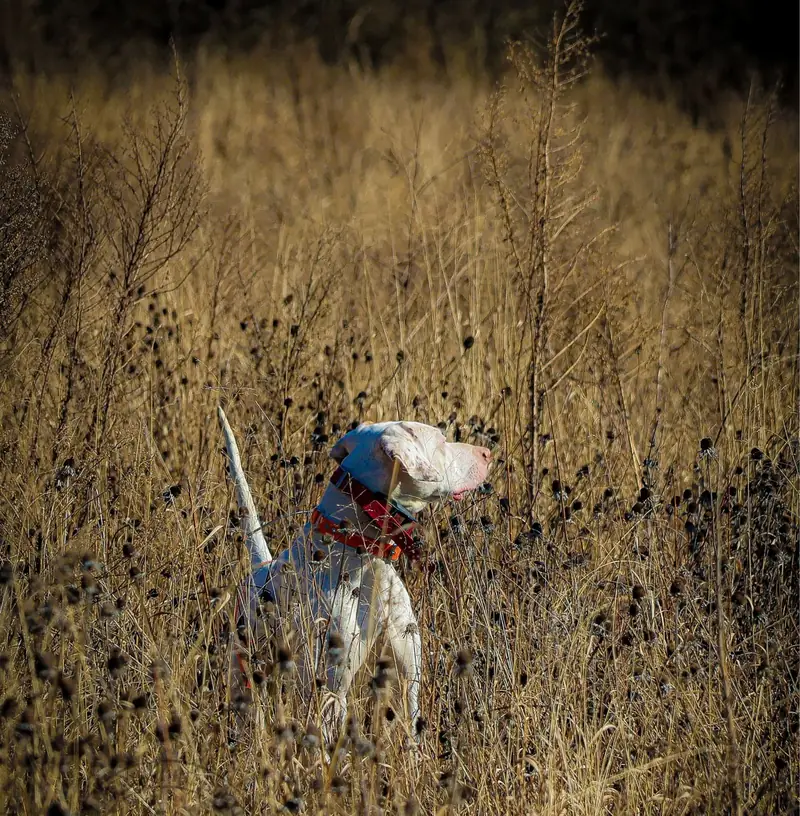
How a covey actually comes together
This is the part worth reading slowly, because it is the difference between Backcountry and most places you have hunted.
- A pointer works out ahead and cuts scent. He stops. From that moment on, he does not move.
- Your handler brings the party up and positions the shooters on the left and right of the dog — so the covey breaks in front of you, not over your shoulder.
- The cockers have been riding in the dog wagon this whole time, saving their legs for exactly this. On the word, they are cut loose from the wagon and drive into the cover in front of the pointer.
- The covey comes out. You shoot.
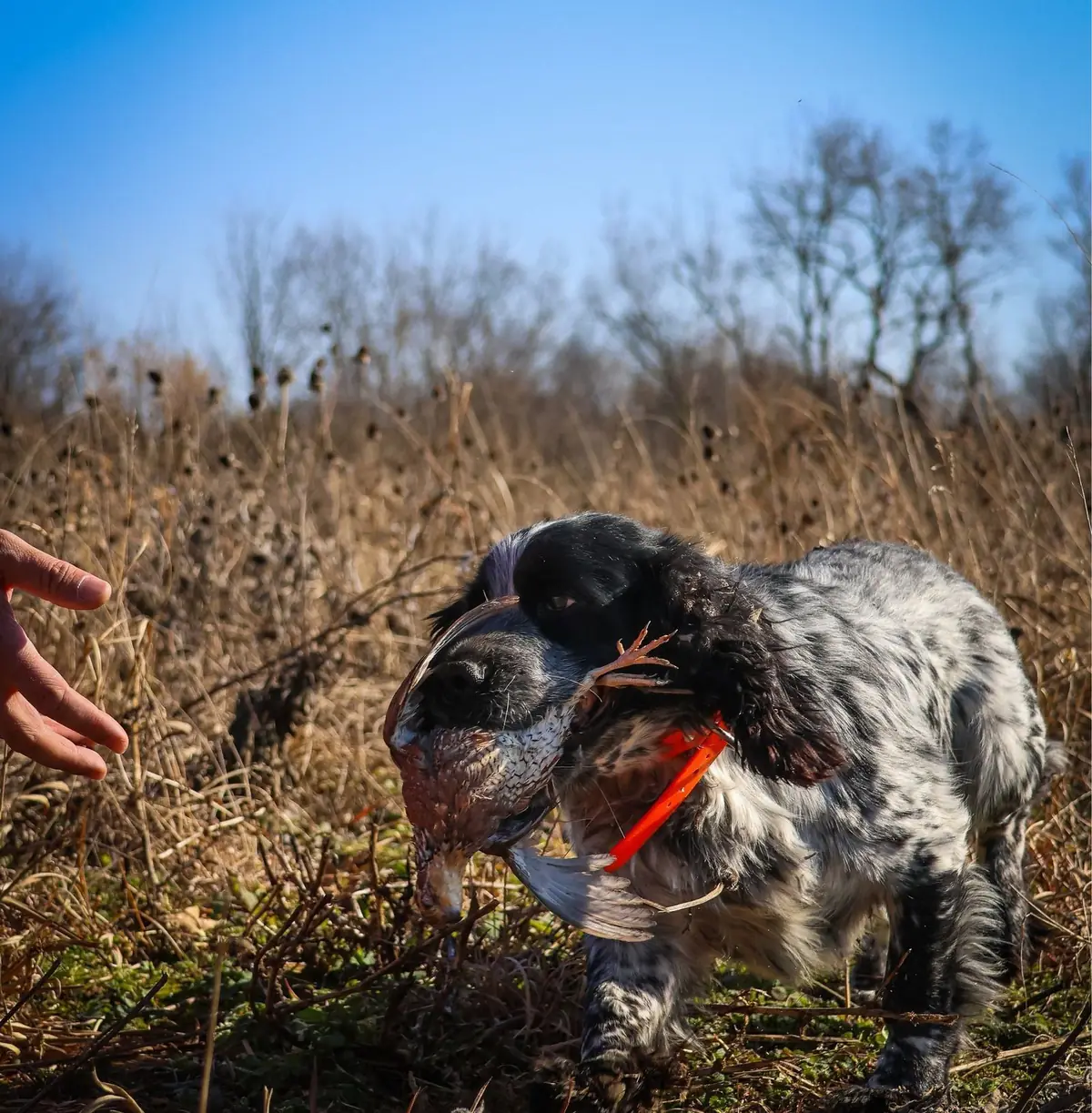
- Then you stand still and wait, because the cockers are working — and they bring every bird back to hand.
“Field trial broke” — and why it matters
Here is the part most hunters have to see before they believe it. Through all of that — the point, the flush, the shot, and the whole retrieve — the pointing dog has not taken a single step. He stands there like a statue until he is released.
That is what field trial broke means, and it is not a small thing. A dog that breaks at the flush is a dog in the way of your second barrel and on top of the birds on the ground before the cockers can get to them. Ours hold. It is years of work, and it is the reason the whole sequence stays calm, safe and orderly instead of turning into a scramble.
That is the Backcountry difference.
Ride, walk, or take the wagon
Your call, and you can change your mind at lunch. Our handlers can work the dogs from horseback or on foot right alongside you — whichever you would rather have. Most parties want the guide on the ground with them, and that is how the majority of our hunts run.
As for you: walk it if you want the miles, or ride the dog wagon if you would rather save your legs for the shooting. Nobody here is going to make you do it one way.
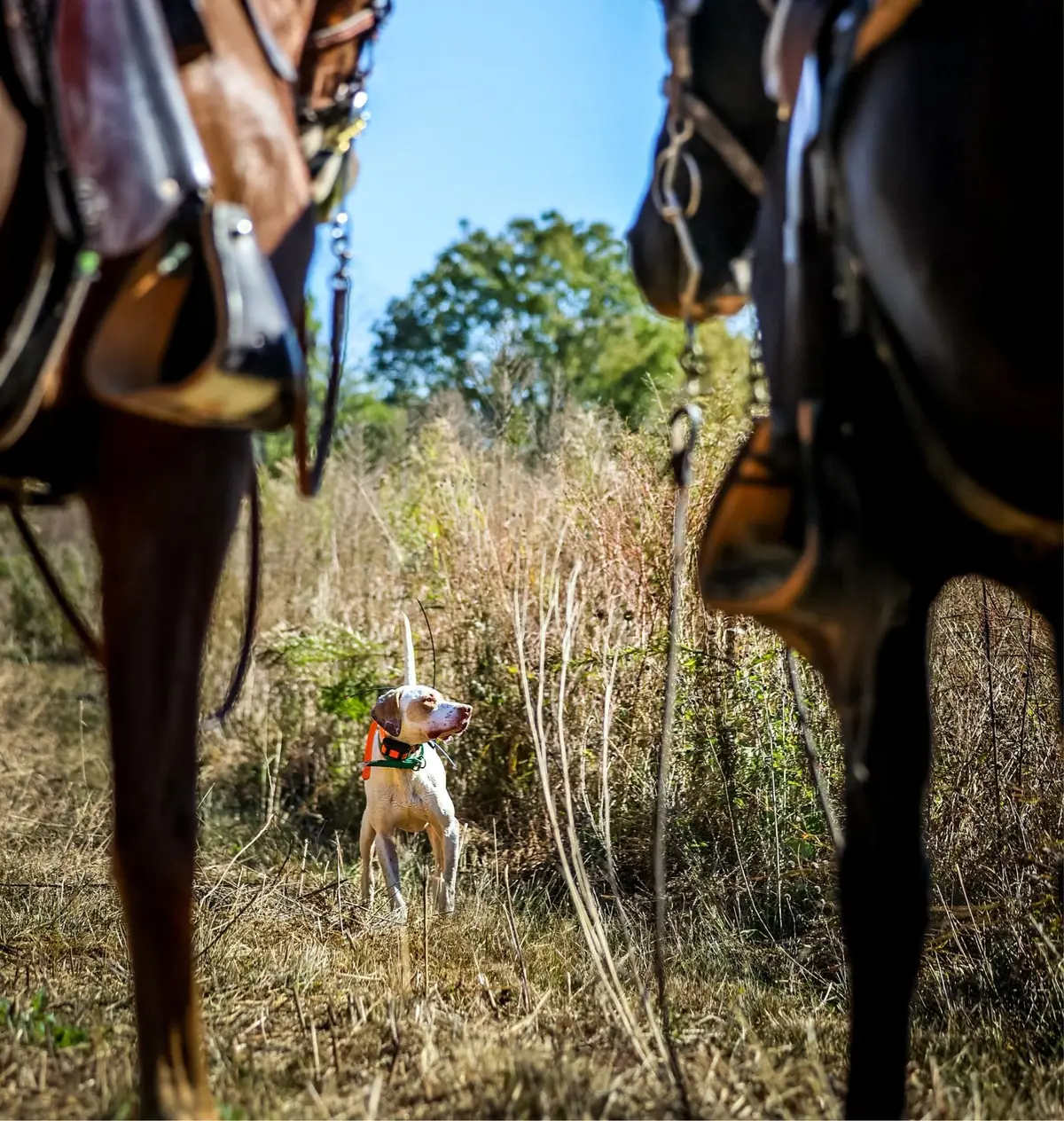
The pointers
Our pointing string comes out of field trial breeding — dogs bred for range, for bird sense, and for the style and steadiness that make the sequence above possible. They are not kennel dogs brought out on weekends. They run all season, on the same ground, and they know where the birds live better than anyone on the property does.
The cockers
An English cocker is a small, hard-driving flushing dog with an outsized nose and a genuine desire to put a bird back in your hand. Riding the wagon between finds keeps them fresh, so when they are cut loose they go in hard.
The retrieve is not a formality here. Our cover is thick on purpose — native warm-season grass, forbs and food plot strips — and a downed bird in that stuff is gone without a good nose on it. The cockers are the quiet reason your bag comes out even with your shooting.
How many finds should you expect?
A half day at Backcountry typically produces 12 to 18 covey rises. Weather, dogs, and how hard your group pushes all move that number, but that is a normal day here. You will cover real miles between them — these are coveys, not singles set out in a small field.
Bring your own dog
You are welcome to, and plenty of our guests do. Hunts are tailored to the group — run your dog solo, or in rotation with ours so it gets clean bird contacts without carrying the whole day. Our guides make sure it stays smooth and safe for the dog and for the hunters.
If you are staying over, kenneling and overnight care for your dog are included at no extra charge.
Why the dogs are the reason for the price
A hunt here is priced for the party, not the bird — one rate covers up to four guns. What that rate is really buying is a string of dogs that took years to build and a season of running to keep sharp, on ground managed for wild-bird behavior rather than convenience.
Chef-crafted meals, a warm fire, and true Southern hospitality wait at the other end of it.