Dogs on point, coveys breaking, and evenings on the porch. Every photograph here was taken on the preserve, on ordinary hunting days — nothing staged and nothing borrowed.
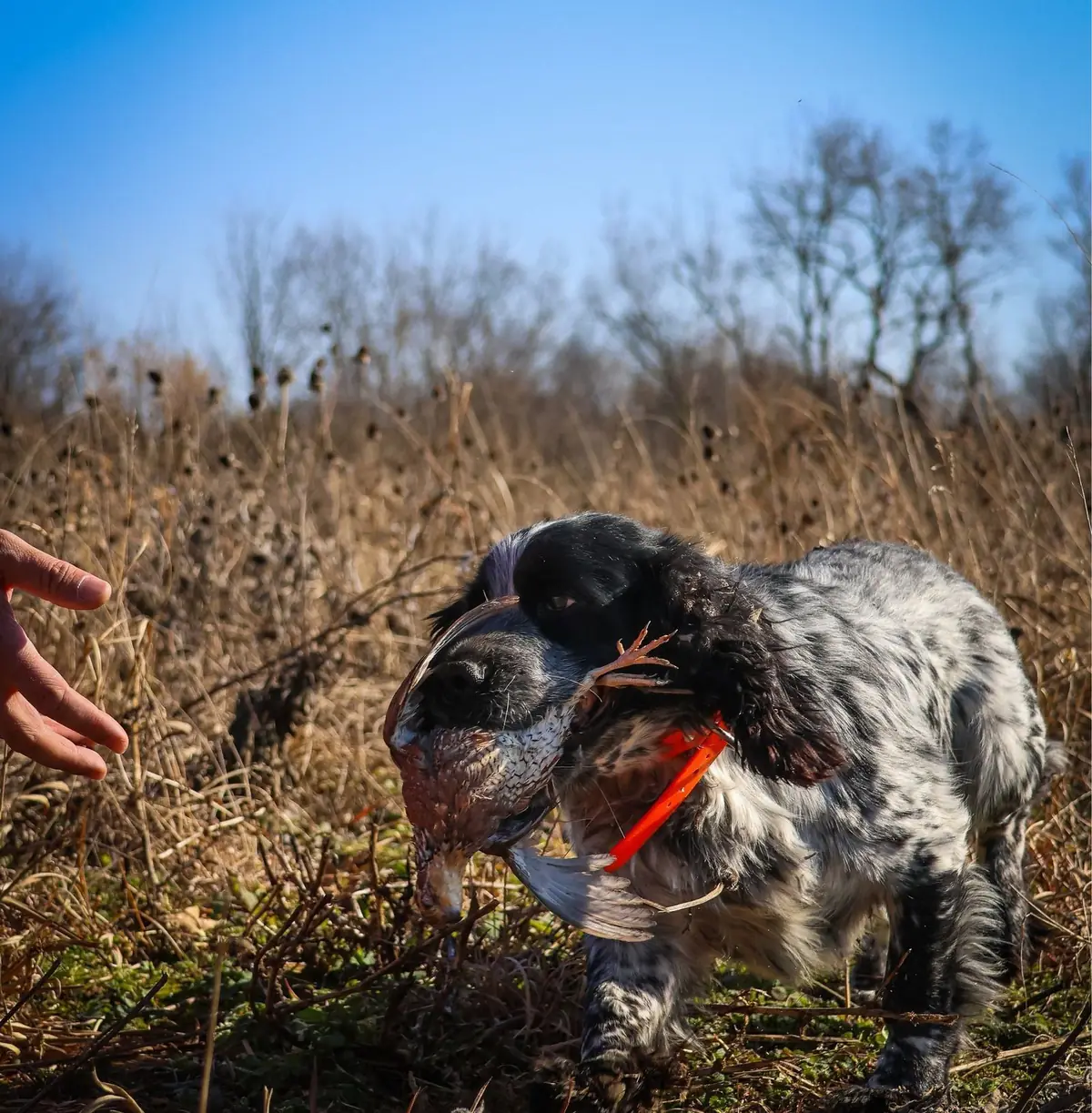
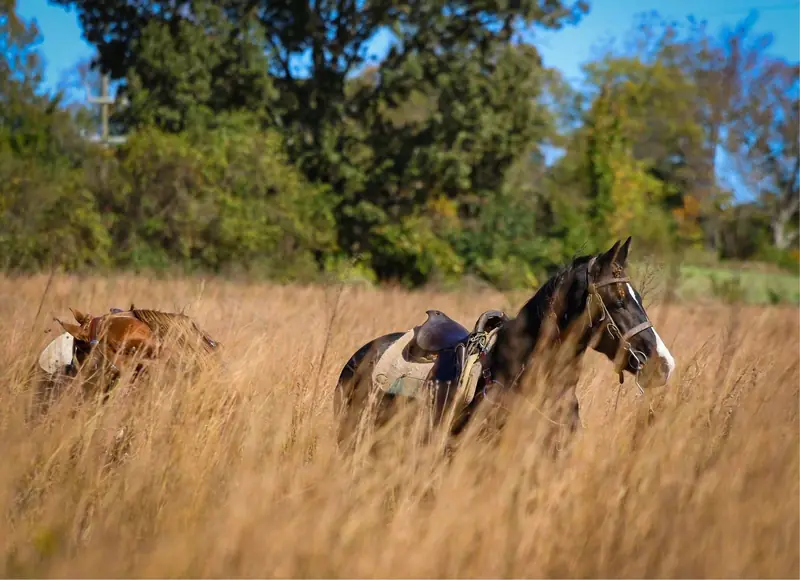
A covey breaks over native grass with the setter still steady, and the old barn on the treeline behind.Handlers work the pointers from horseback or on foot — whichever the party prefers.Birds on every side at once. This is what a covey rise actually looks like.Locked up in golden broomsedge, tail high, waiting on you to walk in.An English cocker brings a bobwhite back to hand. The reason your bag matches your shooting.A crossing bird low against the treeline.Golden hour at the edge of the bird fields.Head up, tracking collar on, scenting the wind.Blaze orange moving through native warm-season grass.Two bobwhites and a broken gun. A good half hour.The Farm House Lodge, a few steps from the bird fields.Where the day gets talked about, once the guns are put away.Chef Lucas plating the Backcountry Cut in the lodge kitchen.The bourbon comes out after the hunt. Never before it.Strips cut through native cover, placed to hold coveys where they want to live.Mist burning off the food plots at first light.Horses shoulder-deep in autumn cover between sessions.Bird dog prints on the lodge wall.
What you are looking at is over 220 acres of native warm-season grass, forbs and conservation plantings outside Glasgow, Kentucky, and the string of field trial bred pointers and English cockers that hunt it. A typical half day here produces 12 to 18 covey rises.